
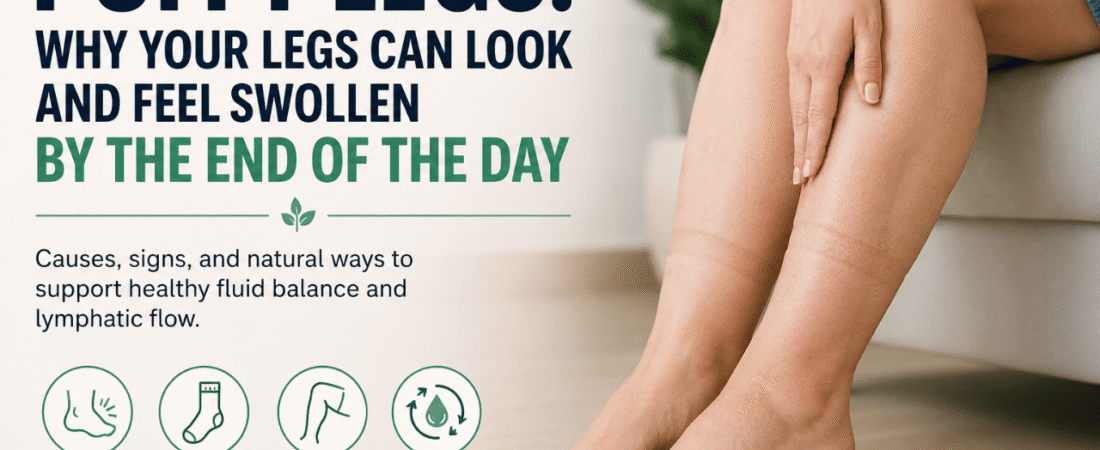
Puffy legs can be frustrating because they often seem to appear gradually. You may wake up feeling completely normal. Your shoes fit comfortably, your ankles look fine, and your legs do not feel unusually heavy. Then the day moves on. By late afternoon or evening, your legs may look fuller, your ankles may appear swollen, your socks can leave noticeable marks, and your shoes may suddenly feel tighter than they did in the morning.
For some people, puffy legs are occasional. For others, they become part of a repeated daily pattern. That pattern can make you wonder why your legs get puffy later in the day, why your ankles look swollen at night, why your socks leave deep marks, or why your legs feel heavy even when your weight has not changed.
There is no single answer. Puffy legs can be influenced by daily movement, prolonged sitting or standing, hydration, sodium intake, fluid balance, circulation and other factors. Understanding the pattern is usually the first step.
What Are Puffy Legs?
“Puffy legs” is a common way people describe legs or ankles that look fuller or more swollen than usual. The puffiness may be subtle. It may show up mostly around the ankles. It may become more noticeable after several hours of sitting or standing.
Some people notice that their calves feel tighter. Others see indentations from socks or shoes. Some simply describe their legs as looking bigger or feeling heavier by the end of the day.
Puffy legs and heavy legs are not exactly the same thing, but they often overlap. Puffy legs describe appearance. Heavy legs describe sensation. And many people experience both at the same time.
Why Do Legs Get Puffy Later in the Day?
One of the most common patterns people notice is that their legs look relatively normal in the morning but become puffier as the day progresses.
Gravity is one obvious factor. When you spend hours upright, fluid tends to move toward the lower part of the body. Long periods of sitting or standing can make this more noticeable.
Movement also matters. Walking and normal muscle activity help support circulation and fluid movement throughout the body. That means someone who spends eight or nine hours sitting at a desk may experience their legs differently than someone who moves regularly throughout the day.
The same can apply to people who stand for long shifts, drive for extended periods or spend much of the day in one position.
Puffy Legs After Sitting or Standing All Day
Desk workers often notice puffy legs in the afternoon or evening. You may start the morning feeling fine, spend several hours sitting, and then notice that your socks feel tighter or your ankles look fuller when you stand up.
Standing for hours can create a similar pattern. People who work in retail, hospitality, healthcare, warehouses or other jobs that require long periods on their feet may notice their ankles becoming puffier toward the end of a shift.
The key is often the pattern: morning feels normal, afternoon brings heaviness, and evening brings visible puffiness or sock marks.
If this sounds familiar, we also covered the broader pattern of heavy legs, sock marks and morning puffiness in another article.
Read next: Heavy Legs, Sock Marks and Puffy Mornings: What Could Be Behind It?
Why Do Socks Leave Marks Around the Ankles?
Sock marks are another common complaint associated with puffy legs. Sometimes the explanation is simple: the socks are tight.
But when sock marks become more noticeable later in the day, they may also reflect temporary changes in the size or fullness of the ankle area.
This is why sock marks are such a strong visual clue. You can physically see that something changed between morning and evening.
Puffy Legs, Fluid Retention and the Lymphatic System
Many people use the terms puffy legs, swollen legs and fluid retention interchangeably. They are related ideas, but they are not always identical.
The lymphatic system is often discussed in conversations about fluid movement. It helps transport lymphatic fluid throughout the body. Unlike the circulatory system, it does not have a central pump like the heart.
Normal movement, muscle activity and other body processes help lymphatic fluid move. This is one reason the wellness industry has become increasingly interested in lymphatic support.
People searching for ways to address puffy legs often come across massage, dry brushing, compression, movement routines and supplements marketed around lymphatic flow.
What People Commonly Try for Puffy Legs
When puffy legs become annoying, most people experiment with lifestyle changes first. They may walk more, take breaks from prolonged sitting, elevate their legs, stay hydrated, reduce sodium, stretch, try massage or use compression garments.
Some people also explore dietary supplements marketed around circulation, fluid balance or lymphatic support.
This is where products like Linfaflow enter the conversation.
Where Linfaflow Fits In
Linfaflow is a liquid botanical supplement marketed around lymphatic support and normal fluid balance.
Its positioning is especially targeted toward people who relate to puffy legs, puffy ankles, heavy legs later in the day, visible sock marks, morning puffiness and a general feeling of being swollen or weighed down.
Instead of capsules, Linfaflow comes in a liquid drop format. The formula is built around four botanical ingredients: Stillingia Root, Cleavers, Prickly Ash Bark and Red Clover.
The product is marketed as a daily-use supplement rather than an aggressive short-term cleanse or flush.
That distinction is a big part of its positioning. Many people searching for puffy leg support are not looking for something harsh. They want something that fits into a routine.
If you want to go deeper into the product itself, its ingredients and positioning, you can read our full Linfaflow review.
See the Full Linfaflow Review
Puffy Legs vs Heavy Legs
Puffy legs and heavy legs are related, but they are not the same thing.
Puffy legs describe what the legs or ankles look like. Heavy legs describe how they feel.
Someone may notice their ankles becoming visibly fuller while also feeling that their legs are tired, heavy or uncomfortable.
That overlap is why the two topics fit together so well.
When Puffy Legs Should Be Checked by a Doctor
Not all leg swelling belongs in the wellness category.
Sudden swelling, persistent swelling, significant pain or unexplained changes should be taken seriously.
You should also seek medical advice if swelling appears in only one leg, becomes severe or is accompanied by other concerning symptoms.
A supplement should never replace proper medical evaluation when symptoms are significant or persistent.
Final Thoughts
Puffy legs are often less about one dramatic event and more about a daily pattern.
You wake up normal. Your ankles gradually feel fuller. Your socks leave marks. Your legs feel heavier. Then the next morning, the cycle begins again.
Movement, hydration, diet, sodium intake, prolonged sitting or standing and normal fluid balance can all influence how your legs feel.
For people specifically researching lymphatic and fluid-balance support, Linfaflow is one product that may be worth learning more about because of its liquid botanical format and focused positioning.
Affiliate Disclosure: This article may contain affiliate links. If you purchase through one of these links, 728 Digital Media may earn a commission at no additional cost to you.